Ambient Audio Shaping Roulette Variant Trends in Mobile Applications Throughout Emerging Economies
Written by Finley Keller · Aug 20, 2026
Ambient Audio Shaping Roulette Variant Trends in Mobile Applications Throughout Emerging Economies
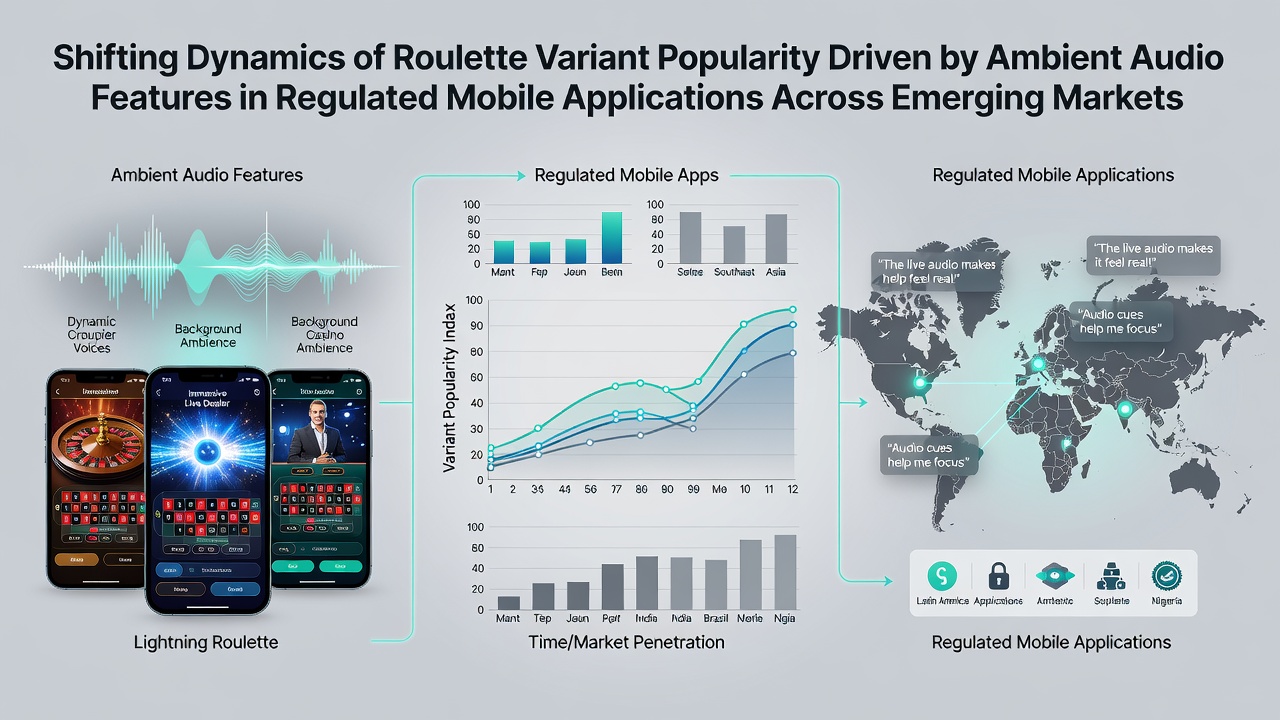
Regulated mobile applications across emerging markets have seen measurable shifts in roulette variant popularity tied directly to ambient audio features, with data from regional operators indicating that sound design elements influence user selections between European, American, and French wheel formats. Studies conducted in 2025 across Southeast Asia and Latin America reveal that players gravitate toward variants featuring layered background tracks and dynamic wheel spin sounds, which operators adjust through software updates to match local preferences.
Audio Elements Driving User Choices in Regulated Environments
Ambient audio features encompass subtle sound layers including crowd murmurs, chip clinks, and evolving musical motifs that accompany different roulette styles, and developers integrate these elements to comply with licensing requirements while enhancing session retention. Figures from mobile analytics platforms show that applications incorporating region-specific audio adjustments report higher engagement rates for French roulette variants in markets like Brazil and India, where the softer tonal qualities align with user expectations shaped by local entertainment traditions. Researchers at institutions tracking digital gaming patterns note that these audio cues operate alongside regulatory mandates for fair play disclosures, creating environments where sound becomes a functional component of variant differentiation rather than mere decoration.
Operators update their platforms periodically to test audio configurations, and results from controlled rollouts demonstrate that variants with adaptive ambient tracks sustain longer play sessions compared to those relying on static sound files. This pattern holds across jurisdictions where mobile gaming receives oversight from bodies such as the Philippine Amusement and Gaming Corporation, which requires transparent reporting on user interface modifications.
Regional Regulatory Influences on Sound Implementation
Emerging market regulators have introduced guidelines addressing digital interface elements, including audio, as part of broader efforts to standardize mobile casino experiences, and these rules affect how developers deploy ambient features in roulette applications. In South Africa, licensing conditions emphasize responsible gaming prompts delivered through audio signals, which operators combine with variant-specific soundscapes to direct attention toward particular wheel types without violating disclosure standards. Data compiled through 2026 indicates that apps adhering to these combined audio and regulatory frameworks experience distinct popularity curves, with European roulette gaining traction in African markets due to its associated neutral tonal profiles.
What's interesting emerges when examining cross-border services, where audio localization helps applications navigate varying compliance landscapes, and one study from the University of the Witwatersrand documented correlations between customized sound elements and shifts in user preference data across multiple provinces. University research further connects these trends to broader patterns in mobile entertainment consumption, noting that ambient audio serves as an accessible tool for operators working within constrained bandwidth environments common in developing regions.

Market Data and Variant Performance Patterns
Analytics from regulated platforms operating in August 2026 highlight that ambient audio adjustments correlate with measurable changes in roulette variant distribution, particularly in markets expanding their mobile licensing frameworks. European-style wheels often record increased selection rates when paired with understated ambient layers, whereas American variants perform better under configurations featuring more pronounced rhythmic elements, according to aggregated operator reports from Latin American and Asian territories. These observations stem from user behavior tracking that isolates audio variables while holding other interface factors constant.
Industry associations in the Asia-Pacific region compile periodic summaries showing that applications prioritizing audio customization achieve steadier growth in active users, and this holds true even as overall mobile gaming revenues fluctuate due to economic conditions. Observers tracking these developments point to the integration of adaptive sound systems as a practical response to competitive pressures, where small differences in ambient design contribute to sustained differences in variant popularity.
Technical Adaptations and Future Trajectories
Developers refine audio engines to respond to user interaction data, allowing ambient features to evolve based on aggregate selections across regulated applications, and this technical approach supports compliance with emerging standards in markets like Kenya and Colombia. Evidence from platform audits suggests that such adaptations maintain alignment with fairness requirements while accommodating the diverse auditory preferences documented in user surveys. As mobile infrastructure improves in these areas, further refinements to sound layering techniques may continue to influence how roulette variants distribute among players.
Conclusion
The interplay between ambient audio features and roulette variant popularity reflects ongoing adaptations within regulated mobile ecosystems across emerging markets, with available data underscoring the measurable impact of sound design on user pathways. Regulatory bodies and research institutions continue to monitor these dynamics as licensing environments mature, providing a foundation for understanding how technical elements shape entertainment options in expanding digital spaces.