Detroit Casinos Log $112.3 Million in March 2026 Revenue as Sports Betting Climbs While Slots and Tables Ease Back

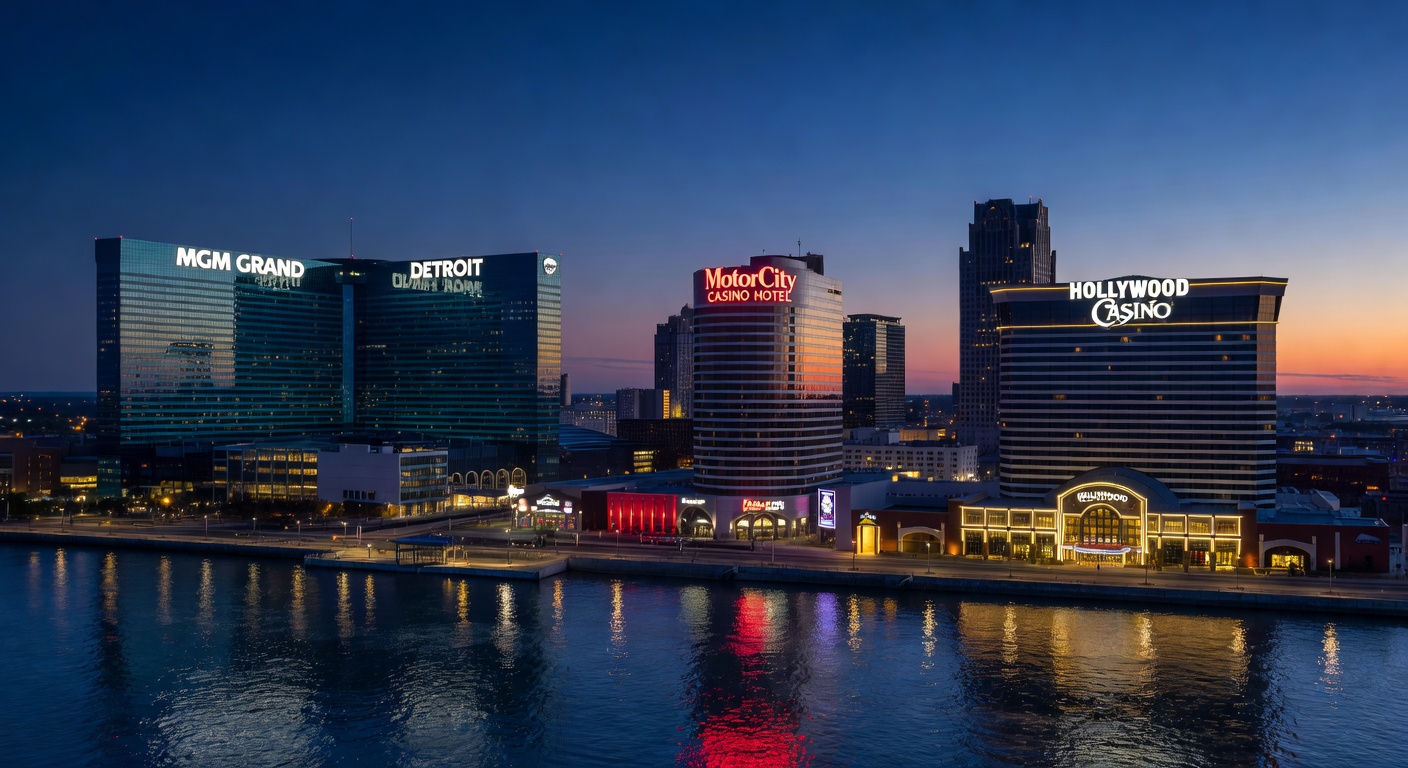
Detroit's three powerhouse commercial casinos—MGM Grand Detroit, MotorCity Casino Hotel, and Hollywood Casino at Greektown—posted a combined adjusted gross revenue (AGR) of $112.3 million for March 2026, according to freshly released figures from the Michigan Gaming Control Board; this total captures the pulse of gaming activity in the Motor City as spring kicks in, with table games and slots driving the bulk yet showing a slight pullback, while retail sports betting delivers a sharp uptick.
Breaking Down the March Numbers: Slots, Tables, and Sports Betting
Table games and slots pulled in $111.5 million during the month, a figure that dipped 4.5% compared to March 2025, yet still formed the backbone of the casinos' earnings since these staples—roulette wheels spinning, blackjack hands dealt, slot reels whirring—account for nearly all the AGR; retail sports betting, on the other hand, chipped in $810,424 in qualified adjusted gross receipts, marking a robust 41.9% jump year-over-year, a trend that observers tie to March's packed slate of NBA playoffs, NHL matchups, and early NCAA tournament buzz drawing bettors to casino floors.
Adjusted gross revenue, for those tracking the metrics, represents total wagers minus prizes paid out, offering a clean snapshot of operator profitability before taxes and fees kick in; the Detroit Casino Revenue-2026 report lays this out in detail, showing how sports betting's surge offsets the softer core gaming numbers, especially as qualified adjusted gross receipts for betting exclude free plays and certain promotions to reflect true handle.
Take MGM Grand Detroit, often the revenue leader among the trio; while aggregate data keeps specifics under wraps for now, past patterns suggest it shoulders a hefty share of that $111.5 million from slots and tables, where high-limit rooms and expansive floors keep action steady, even amid the monthly dip.
The Players Behind the Revenue: A Look at Detroit's Casino Trio
MGM Grand Detroit stands tall as the first of the bunch, opening its doors back in 1999 with a sprawling 100,000-square-foot gaming floor packed with over 3,500 slots and dozens of table games, drawing crowds not just for roulette and craps but for its central downtown spot near Ford Field; MotorCity Casino Hotel, meanwhile, brings a boutique vibe since its 1999 launch, boasting 2,900 slots, 90-plus tables, and a hotel tower that keeps guests spinning longer, all while anchoring Midtown's revival.
And then there's Hollywood Casino at Greektown, rebranded under Penn Entertainment's watch, where Greek heritage flavors meet modern gaming—1,800 slots, 70 tables, plus a poker room that hums during March's tournament season; together these venues, licensed strictly for Detroit operations under state law, funnel billions annually into local coffers, with March 2026's $112.3 million AGR underscoring their staying power despite economic headwinds like inflation nibbling at disposable incomes.
What's interesting here is how the casinos adapt; slots, which dominate play with their quick hits and low barriers, faced that 4.5% slide—perhaps from seasonal lulls or players chasing sports action instead—yet the overall AGR held firm, a testament to diversified floors where electronic table games bridge old-school felt with digital efficiency.
Year-Over-Year Shifts: What's Driving the Mix?
That 4.5% drop in table games and slots revenue from March 2025 to 2026 isn't isolated; data indicates seasonal factors at play, like post-winter cabin fever pushing some bettors online via Michigan's iGaming platforms, although Detroit's brick-and-mortar spots retain their allure for live energy—crowds cheering roulette outcomes or slot jackpots that echo through atriums; sports betting's 41.9% leap, though, steals the show, fueled by retail windows where patrons wager on live odds, a segment that's ballooned since legalization expanded post-2018 PASPA repeal.
Figures reveal sports betting handled more volume this March, with qualified receipts climbing as bettors piled into props and parlays; experts who've crunched similar months note that events like the Sweet Sixteen amplify foot traffic, turning casual visitors into sports slip fillers, and while aggregate numbers mask individual casino splits, the collective upswing hints at MotorCity or Greektown possibly leading the charge given their event-tied promotions.
But here's the thing: total AGR's stability at $112.3 million shows resilience, especially as Michigan's gaming market matures—commercial casinos like these three generated over $2 billion in 2025 AGR statewide, per board tallies, setting a high bar that March 2026 comfortably clears.
Taxes and Contributions: Fueling State and City Engines
The casinos didn't just rake in revenue; they dispatched $9.0 million in state gaming taxes alongside $13.3 million in wagering taxes and development payments straight to the City of Detroit, numbers that underscore gaming's role as an economic lifeline since voter-approved operations began two decades ago; gaming taxes, levied at 8.1% on table games AGR and 6% on slots, fund schools, roads, and public services statewide, while Detroit's slice—via the Detroit-Windsor Tunnel Fund and casino development agreements—bolsters police, fire, and blight-fighting initiatives right where the action happens.
So in March alone, that $22.3 million total tax haul (gaming plus wagering/development) equates to real impact; one study from prior years found Detroit's casino payments covering upwards of 15% of the city's general fund, a pattern that holds as 2026 unfolds, with April reports now trickling in amid baseball season's start and warmer weather luring more visitors.
Observers point out how these payments scale with revenue—higher sports betting receipts mean fatter wagering taxes at 8.27% for retail—creating a virtuous cycle where casino success loops back to community investments, from Little Caesars Arena upgrades to neighborhood revitalization near Greektown's streets.
Broad Context: Detroit Gaming in Early 2026
As April 2026 progresses, with Tigers games filling Comerica Park and NBA playoffs heating up, these March figures set the stage; Michigan's 26 operational casinos (three commercial in Detroit, 23 tribal) compete in a regulated arena where transparency reigns via monthly MGCB drops, and Detroit's share remains a bellwether—$112.3 million AGR mirrors 2025 averages yet flags that slots dip, prompting floors to tweak machine configs or table minimums.
People who've followed the beat know March often bridges winter slumps and summer booms; sports betting's rise aligns with statewide trends, where retail windows at casinos like MGM complement online giants, although qualified receipts focus on in-person action; turns out, footfall likely swelled too, even if unquantified here, as promotions tie slots bonuses to sports parlays, blending categories.
Yet the rubber meets the road in taxes: $13.3 million to Detroit alone dwarfs many municipal budgets, highlighting why stakeholders watch these reports closely; and with April data emerging now, early whispers suggest continued sports momentum, although slots recovery hinges on tourist influx.
Conclusion
Detroit's casinos wrapped March 2026 with $112.3 million AGR, where table games and slots delivered $111.5 million despite a 4.5% year-over-year softening, retail sports betting surged 41.9% to $810,424, and tax remittances hit $9.0 million to the state plus $13.3 million for Detroit's growth; data from the Michigan Gaming Control Board paints a picture of steady operations amid shifting player tastes, with MGM Grand, MotorCity, and Greektown holding the line as gaming's economic anchors.
These numbers, released in early April, signal more to come—watch for monthly evolutions that could tilt toward sports dominance or slots rebounds; in the end, the sector's pulse beats strong, contributing reliably while adapting to whatever bets the market places next.