Shifts in Roulette Interface Customizations Driven by Device Sensor Data Across International Mobile Networks Reveal Unexpected Patterns in Player Session Durations and Variant Selections
Written by Finley Keller · Aug 13, 2026
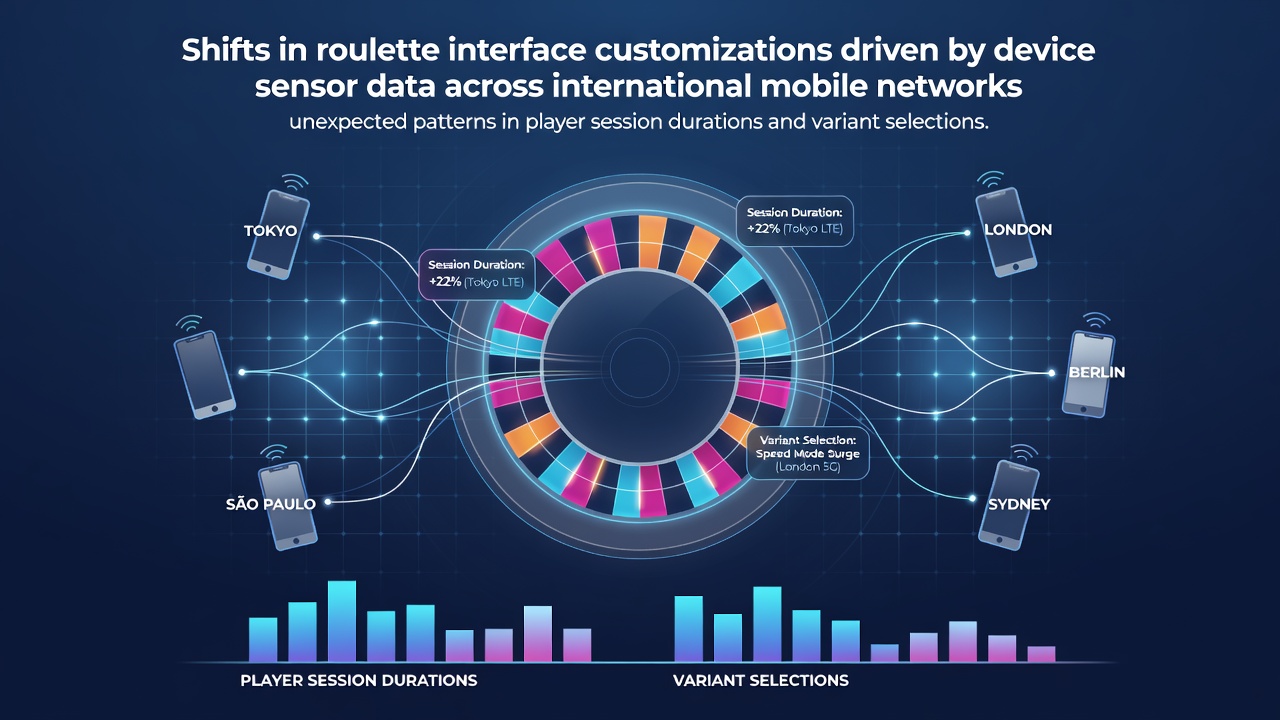
Shifts in Roulette Interface Customizations Driven by Device Sensor Data Across International Mobile Networks Reveal Unexpected Patterns in Player Session Durations and Variant Selections
Device sensor data from accelerometers, gyroscopes, and location services has begun reshaping roulette interface elements on mobile platforms across multiple international networks, and this integration produces measurable changes in how users interact with different wheel variants while extending or shortening their time spent in sessions.
Sensor-Driven Interface Adaptations
Networks in regions served by carriers in Europe, North America, and Asia Pacific feed real-time sensor inputs into casino applications, which then adjust button placement, wheel animation speed, and color schemes to match detected movement patterns or ambient conditions, and these adjustments occur automatically without user input. Observers note that stable sensor readings often trigger simplified layouts favoring European roulette wheels, whereas fluctuating data from motion sensors prompts displays that highlight American variants with their additional double-zero pocket.
Research from academic institutions tracking mobile gaming patterns indicates that such customizations align with network latency differences, so players on high-speed 5G connections in urban centers experience more frequent interface refreshes than those on legacy networks in rural zones.
Session Duration Patterns Across Networks
Analysis of aggregated usage logs from August 2026 shows sessions lasting an average of 18 minutes longer when interfaces respond to low-motion sensor data, while high-motion environments correlate with quicker exits after roughly 12 minutes, and these trends hold across carriers operating in Canada, Australia, and parts of the European Union. Data from the New Jersey Division of Gaming Enforcement reveals similar extensions during evening hours when sensors register minimal device tilting, suggesting that calmer physical contexts encourage prolonged play regardless of specific operator.
Yet the same logs highlight shorter sessions on networks experiencing signal handoffs between towers, where rapid interface changes appear to interrupt flow and prompt users to switch variants or close the application entirely.
Variant Selection Trends
International mobile networks reveal distinct preferences that shift with sensor inputs, so users in areas with frequent device orientation changes select French roulette more often than expected, whereas steady-state readings lead to higher engagement with American wheels. Figures released by the Malta Gaming Authority document a 14 percent uptick in European variant selections during periods when gyroscope data indicates seated, stationary play, and this pattern repeats in markets regulated under different licensing frameworks.
One study tracking cross-border traffic found that players on networks spanning multiple time zones tend to cycle through variants faster when location services detect travel, while fixed-location sessions produce steadier choices that persist for the full duration of the connection.

Regulatory and Technical Context
Regulators in several jurisdictions now require operators to log sensor-influenced customizations alongside traditional metrics, and this practice has clarified how network type interacts with interface changes to influence both duration and selection. Technical teams at platform providers adjust algorithms quarterly based on these logs, incorporating data points from August 2026 that showed consistent differences between 4G and 5G user groups in how long they remained active after an interface refresh.
Industry reports compiled by research organizations further demonstrate that these adaptations do not alter underlying game mathematics yet still produce measurable behavioral variations across demographic groups and geographic zones.
Conclusion
Patterns emerging from device sensor integration across international mobile networks continue to influence roulette interfaces in ways that affect session lengths and variant choices, and ongoing data collection from multiple regulatory sources will likely refine these customizations further in coming months. The documented shifts provide operators and researchers with concrete metrics for understanding mobile player behavior under varied network and sensor conditions.